Tax Lien Foreclosure vs. Tax Deed Sale: What Homeowners Need to Know
When property taxes go unpaid, homeowners often hear the terms tax lien foreclosure and tax deed sale used interchangeably — but they are not the same thing, and the difference can directly affect property ownership and surplus fund rights.
Here’s a clear, homeowner-friendly breakdown.
What Is a Tax Lien Foreclosure?
A tax lien foreclosure happens when an investor who purchased a tax lien certificate takes legal action to foreclose on the property if the taxes remain unpaid.
How it works:
The county sells a tax lien certificate to an investor
The investor pays the delinquent taxes on your behalf
You still own the property during the redemption period
If the lien is not redeemed, the lienholder may initiate foreclosure
Ownership can transfer without a traditional public auction
Important to know:
Tax lien foreclosures are investor-driven
Surplus funds are uncommon in tax lien foreclosures
Outcomes vary widely by state law
👉 Many homeowners mistakenly believe tax lien foreclosures work the same as tax deed sales — they don’t.
📧 intake@visionarysurplusrecovery.com
☎ (813) 859-6649 or text (813) 859-6649
What Is a Tax Deed Sale?
A tax deed sale occurs when property taxes remain unpaid long enough for the county to sell the property itself at a public auction.
How it works:
The county initiates the sale
The property is auctioned to the highest bidder
Taxes, interest, penalties, and costs are paid from the sale proceeds
If the winning bid exceeds what is owed, surplus funds may be created
Surplus funds are held by the Clerk of Court
👉 Tax deed sales are one of the most common sources of tax-related surplus funds.
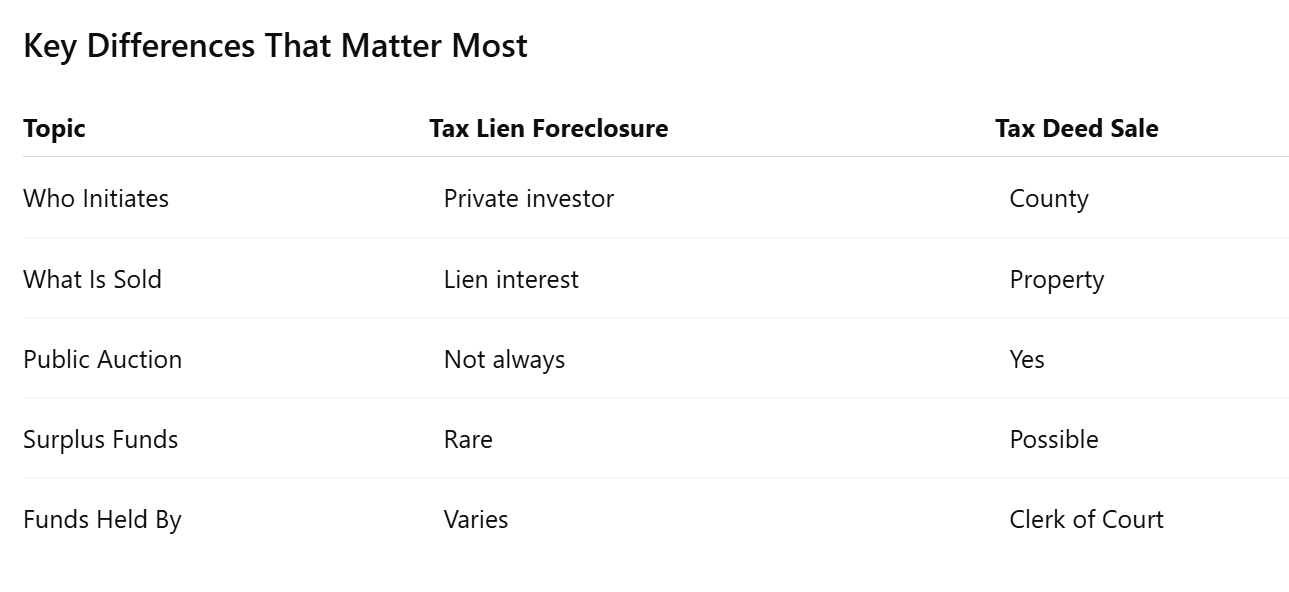
Key Differences That Matter Most
Why This Matters for Surplus Funds
Only tax deed sales typically generate surplus funds.
In cases where surplus exists:
Funds are not automatically paid
A formal claim must be filed
Deadlines, documentation, and ownership proof matter
Heirs, estates, or lienholders can complicate claims
👉 Many homeowners lose access to surplus funds simply because they don’t know the difference between these processes.
How Visionary Surplus Recovery Helps
Visionary Surplus Recovery helps homeowners, heirs, and estates determine:
Whether a tax deed sale occurred
Whether surplus funds exist
Who is legally entitled to claim them
How to file correctly with the Clerk of Court
We handle the paperwork, timelines, and legal coordination — and we only get paid if funds are successfully recovered.
👉 If your property was affected by unpaid taxes, there may still be money owed to you.
Email us today. Call today.
📧 intake@visionarysurplusrecovery.com
☎ (813) 859-6649 or text (813) 859-6649
Understanding the difference between tax lien foreclosures and tax deed sales can protect your rights — and prevent you from leaving money behind.